Stewart’s Story
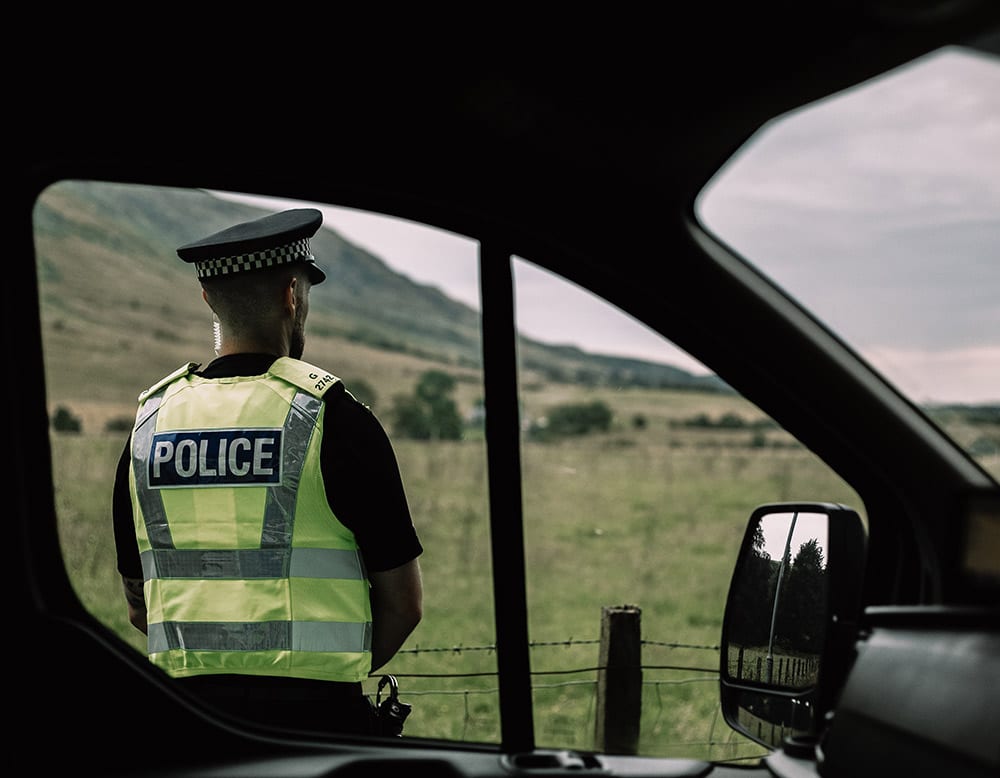
It is important that people see beyond the uniform, but a lot of people don’t
Police. What comes to mind? It’s not all about catching the baddies… PC Kerrigan discusses the side of policing that the public don’t see – and can’t see. Officers dealing with people who are traumatised, lonely, who have mental health or addiction issues and the power of working alongside community groups, schools and youth projects to ensure safer and better outcomes for people across Scotland.
View transcript
“It’s important that people see beyond the uniform, but a lot of people don’t. It’s not because they don’t want to, it’s because they don’t get an opportunity to. When people see the police, they see them arresting people. They see TV documentaries and Netflix. They see videos on Facebook of innocent people being shot or innocent people being assaulted. Nobody sees me walking my beat, because nobody’s interested. Nobody sees me going into the schools and talking to the primary ones about keeping safe on the roads, about stranger danger. Nobody’s interested in watching that Facebook video, but what they don’t see is, they don’t see me going home to my daughter, they don’t see me going home to my wife, they don’t see me playing five asides, or going to the pictures or spending time with my dad. They don’t see any of that.”
“I’m Police Constable Stewart Kerrigan, I have nine years’ service with Police Scotland and I’m currently stationed at Kirkintilloch. Geographically it’s one of the largest subdivisions. One minute, you’re in the countryside, you’re up the hills, two minutes later, you’re in a pocket of deprivation and within that we have to be able to adapt. We have to be able to adapt the way we speak, the way we drive, the way we do everything. Nobody phones the police on a Saturday night when they’re watching X-Factor having a Chinese, people phone us when there’s an emergency. People phone us at their lowest point and that’s the side of society we get to see.”
“My gran says whenever she sees a police car go by with blue lights on, that’s them probably going in for their dinner. You pull into the side and a police car goes by you and that’s it. You don’t know where the police are then going to and that’s it. It can be absolutely anything. We could be going to somebody who’s hurt themselves, that’s cut their wrists, somebody who there’s a report of them trying to hang themselves, or it could be an ongoing fight. Regardless of what it is we’re going to, it’s an emergency. Somebody has contacted the police saying they are in dire need of an emergency response and we’re attending.”
“There is plenty of things the public don’t see and plenty things the public do see. They see us at gala days, they see us at Glasgow Green, they see us in the newspapers and sometimes it’s positive and sometimes it’s negative. We can’t talk about the things they don’t see because it’s personal to people. It’s people’s lives that we’re dealing with. I can’t talk about the times I go to a sudden death and I help out a family, I can’t talk about the times I go in and talk somebody down off a ledge, so, although they don’t see it, they have to trust that we’re looking after them. We now work towards a more restorative way of policing. We have a better grasp of mental health. We are keen to look for the root of problems and when we deal with something, our main aim isn’t just to put somebody in jail. We then submit paperwork in relation to partner agencies. So, we have a vulnerable person database and we can deal with an incident and after that would submit the paperwork for the vulnerable person database for social work to pick it up. Partner agencies would look at it. Going forward, we find a way to combat the issue so the police aren’t back there the next day arresting that person again. So, although we’re the first responder, it’s not as if we just go, right, tomorrow we’ll be back here again. We’re thinking, how can we not be back here again tomorrow? How can we be focussed?
With young persons as well we, we do great work with young people. We do early effective intervention which is about getting them in, explaining why they’ve done what they’ve done. How can we stop you doing that in the future? We work with mental health practitioners as well and it’s all about each grabbing a different colour and painting the picture. We’ve all got a different colour that we all need to fill in different parts to make the picture complete.”
“I think if you ask every single person in Scotland what their definition of the police doing well looked like it would change vastly each and every time. From a policing perspective, I think it’s important that success for us isn’t putting the baddies in jail, I think it has to be much wider than that, success in my eyes is finding the root cause of crime and working with partner agencies towards finding a solution for that. If I stop being hopeful for the future then I hand back my warrant card, because if you stop being hopeful in any job, what’s the point?”