Ross’ Story
This isn’t just another number in the system…it’s a human being.
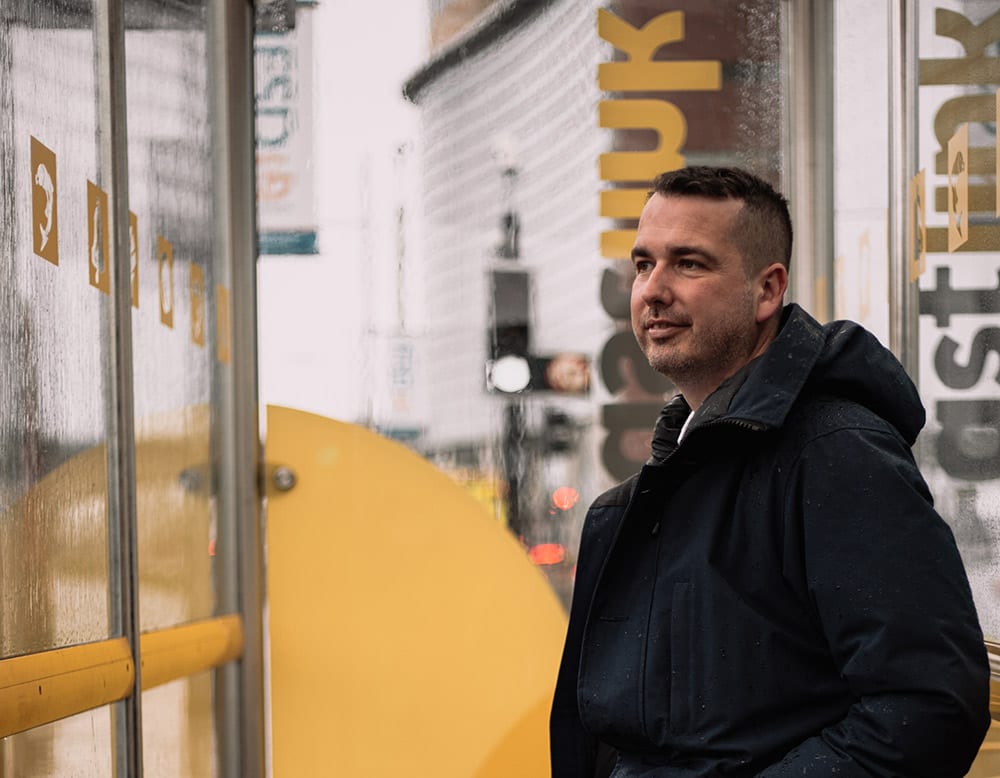
Ross works with young people who have been involved with the justice system. His incredible energy and enthusiasm and his connections with not only the young people but other services, agencies and the local sheriff’s, have helped South Lanarkshire to achieve a number of positive outcomes.
View transcript
“This is the most privileged job you could ever do. It’s like, I do actually feel myself getting goosebumps. I’m Ross White, I’m a social worker from South Lanarkshire council. You can’t even imagine been let into someone’s environment, into their house, in their living room you know, with all their photographs and like, the toys and everything and a privilege also is being able to go into a, sort of a, court setting as well and be able to demonstrate through our service this isn’t just another number in the system, this a young person who, you know, it’s a human being and it’s how you can sort of bring them to life right through a black and white kind of report.”
“I work in South Lanarkshire so that takes in big towns such as Hamilton, East Kilbride, very rural areas such as Lanark and Strathaven and so, it’s a very, I suppose it’s traditionally been known for the steel works and very working class so I think when you do spend time now in the towns, because that’s where I grew up, so it’s quite strange doing a ‘360’ coming back to work in, you definitely just feel there’s a lot more deprivation, poverty, a lot of social issues”.
“First part of my role, what I do is, people just know that I am Ross, so yes, I’m a social worker, but I’m there as Ross for them, so as I say, it’s about me getting to know them, it’s also them getting to know me. There’s times I find that maybe the first four to eight weeks working with a young person, when I work with a young person, it’s just about really them getting to know me because probably I know quite a lot about them. I’ve not written that information, so I don’t know if that’s correct, you know, fully, so I need to kind of wait and see and also there are maybe families who have had historical social work involvement who are very much like, ‘Here’s another social worker telling me what to do’ so, it’s about sometimes trying to change that perception. And I have to say in terms of the approach I take I think that can be broken down in terms of I get like ‘You’re not like the kind of social workers we’ve had before’ or ‘You definitely ask me what’s going on.’ When you’re writing a report about someone, them being part of that journey with you, they know exactly what’s going to be in the report, there’s no surprises and you know, just keeping them at the centre of everything that I do. Because young people, particularly in a criminal justice setting, just automatically think, ‘I’m going to prison. I’m going to Polmont.’ And its about making them realise, well, you do have choices and if you get a structured deferred sentence, I suppose, particularly, the Sheriff’s giving you a six month period to really demonstrate that you don’t want that choice taken away from you, your liberty and then that sort of opens up a whole sort of realm of other choices maybe a young person feels they didn’t have and that can come back to, you know, ‘I didn’t really have the best education experience, Ross.’ Well how do we change that? What choices are out there? What would we like to do? So, yeah, definitely a lot of the role of a social worker in this setting is highlighting to the young person the choices that they do have and how we can support them to realise those choices and the outcomes.”
“I suppose in my own personal reflections when I was studying to be a social worker, if you were asked me what area I wanted to go into initially, it would was adults and mental health. Children and families just had no interest in. Criminal justice I just thought of as very much as a report writing task and in this position I’m in now, I can definitely see the sort of role, within the community with a young person because I’m able to understand their community, where they are and the fact that I’m able to say to them, ‘I would really like to give you a bus pass,’ and they’ll say ‘But what for Ross?’ and I’ll say ‘Because I know that you can keep yourself safe because rather than having to go up certain streets that I know you’ll be going to as a sort of cut to get home where there could be danger for you or, you know, potentially people that you’ve been telling me about who’ve been creating problems for you.’ I know that they can just simply show that and get on a bus. That’s been a big thing for a young person in terms of trust. It’s not just about ‘Oh, is that just to get to my appointment, you know and things?’ Well, no, for me actually it’s about being safe. And the fact that I know that about the young person and I know that’s what’s happening in their community and environment. I think that says a lot to them, you know, that I’m not just a social worker that sits in an office behind a desk that gives them appointments, they come in and I have to go down to see them. It’s a big privilege to be a social worker.”