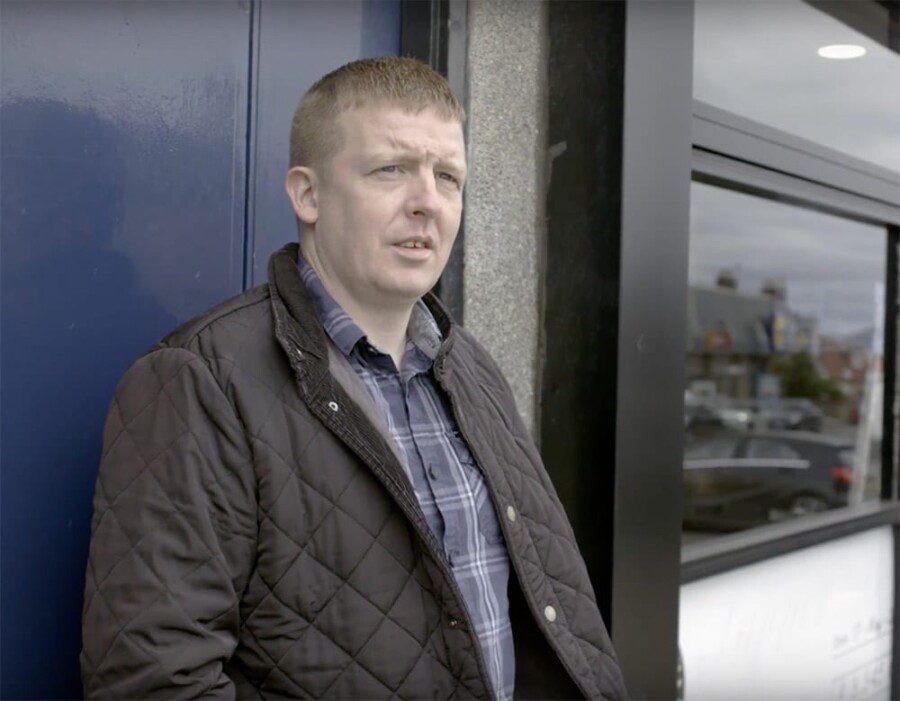
Kevin reflects on being a victim of assault and his journey to find his voice, again.
“I don’t think locking somebody away is the answer.”
“2007, I was at a friend’s fortieth birthday party, and I became a victim of a violent assault. I came out and one of my mates was arguing with a wee guy, just a young boy, about seventeen year old. Ken, like, I thought ‘This is stupid, a couple of days before Christmas.’ I walked down, walked the wee guy away, thought it was all cool.”
“The guys must have come back within about five or six minutes, I got hit over the back of the head with a clothes iron, a baseball bat, and a vodka bottle. It felt like ages, but it was minutes. I noticed that there was a lot of blood. I couldn’t stop it because every time I tried to touch it I was just pushing glass into my ear. So I phoned the 999 operator, just said to her, ‘I think I’m going to die, I don’t want to die on my own, can you speak to me?”
“I don’t think whoever done this to me, going to jail would have helped me heal. There’s no closure when that court case is over. If you can get tae adjust the system where the victims got more help after that. The physical wounds heal pretty quickly, it was maybe six to twelve weeks. The mental scars, they stuck with me for, maybe like, I think I’m still dealing with some of them. I got diagnosed later on in my life with PTSD caused by this event. I couldn’t do anything, I couldn’t go to gigs, couldn’t go to football with my mates, couldn’t face being on the street at night. My life went so downhill, I’d lost everything, because of it, pretty much, and it was just a case of building myself back up.”
“Small steps, getting help from, like, a psychologist, facing the fears. I’d go up to where the attack happened at, like, the time it happened, around midnight, the back of twelve. I’d go up and stand on the scene. When I got sessions with a psychologist, and the things he said would be to give something back to the community, so I volunteered with Victim Support, I thought ‘I endured the trauma, I know what people were going through, I know how it impacts on your life. It’s given me a chance to be a voice for the victims, at one point I didn’t have a voice.”
“I’m all for giving people who’ve offended second chances, people make mistakes. Like I’ve made, if you’ve lived your life and not made a single mistake, you’ve been very fortunate. I don’t think people are born evil or bad, it’s just circumstances, opportunities at life, education. We need to deal with the stigma of how we view the people that are affected by the crime, or committing the crime. We need to be person-centred and see them as that person and not just a stat.” “The community as a whole needs to see crime’s not black and white, it’s not evil and good, it’s just people.”
Kevin reflects on being a victim of assault and his journey to find his voice, again.
I don’t think people are born evil or bad, it’s just circumstances, opportunities at life, education. We need to deal with the stigma of how we deal with people that are affected by the crime, or committed the crime. We need to be person-centred and see that person as a person, and not just a stat.