Carey’s Story
A big part of the treatment isn’t medicine at all… it’s relationships
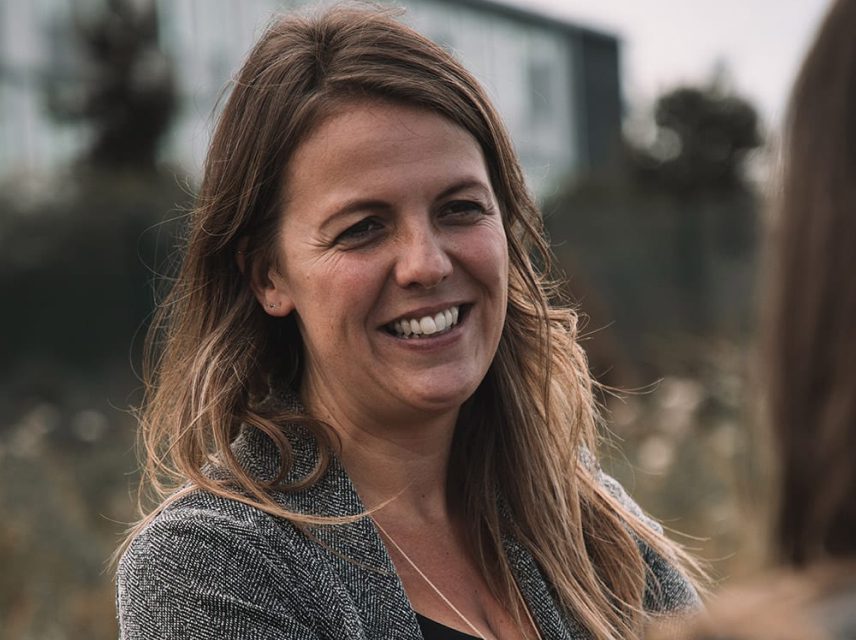
Working as a GP in one of Edinburgh’s most socially deprived areas, Carey believes her key role is being an advocate for her patients. It’s not just about consultations. It’s about raising awareness in bigger conversations about the difficulties people are experiencing in their day-to-day lives.
View transcript
“My name is Carey Lunan and I’m a GP who has pretty much always worked in areas of high deprivation, areas of high poverty. For the last three or four years I have worked in Craigmillar which is one of the most deprived practices in Scotland and prior to that I worked in the homeless practice in Edinburgh.”
“A lot of the issues that people present are related to having less means, less options available to them. So, some of it will be due to difficulty in obtaining employment, some of it will be being in jobs where they are not, they don’t have their rights upheld and they’re difficult jobs, they’re poorly paid, they don’t have stability. Some of the problems will be related to the fact that in a poorer area we recognise that people develop chronic diseases much, much younger than someone in a wealthy area, so some of it is related to the fact that people have poorer physical health. They definitely have poor mental health on average compared to more wealthy areas and a lot of that is just the chronic stress of living in an area of higher adversity and maybe having multiple physical health issues. And we also manage and support people with high levels of addiction in relation to alcohol and drug misuse as well in Craigmillar. So, they take up a big part of our workload on a day-to-day basis.”
“So, we’re quite a big practice in Craigmillar. We’re lucky we’ve got quite a big team of different healthcare professionals in the building. So, for example, our welfare advisor will help people with debts and with appeals for benefits which is an increasing problem for a lot of the patients that we care for and the community links worker will help people to understand how they can attend appointments or get them linked in with charities or third sector organisations. It’s also become a much more diverse population of people who are living here so we have people from many different countries and we use a lot of translation services. That feels like a big difference in the last 14 years.”
“I think a big part of the treatment is not medicine at all. I think a big part of the treatment is relationships if I can say that in its widest sense. So, I think that for many people who are coming in through my door who have pretty significant physical health issues I have to remind myself that that’s not often their main priority. Their main priority is making sure that they have enough money to pay the bills, that they have enough food to put on the table. We have a high use of food banks in Craigmillar and that their priorities are more about survival and less about maintaining optimal physical health which might be, you know, how we would think of ourselves as sort of engaging with the health service, if you like. So, a lot of the issues are not medically treatable but they are in many ways important to be able to address within general practice because what we can do in general practice is we can see someone within the context of their community, we can understand maybe the family history because we were often treating many members of the same family within the community that we know pretty well. We know the organisations that we can link them in with which are not medical, they’re more social, but we also, and I think this is a really important part of the job and why I love it so much, we have a voice that our patients don’t have and we sometimes forget that, I think, that we can be quite active and quite vocal politically if we choose to be and when we’re seeing things that we don’t think are right I think there is a professional duty to raise that as a concern with the people who are in a position to make a difference.”
“We have a role as the first point of contact out in the community when someone has been involved in the criminal justice system and it’s important that they then have the opportunity to come out, rebuild their lives, rehabilitate. We need to make it easy for them to be able to access care. When people are coming out of prison for example it needs to be a seamless process particularly if somebody is on a prescription in prison and that that needs to continue for them to stay well. Now, if those prescriptions fall down and the chain breaks then people are very vulnerable for lots of reasons and the chances of them ending back up in the criminal justice system are high. I do what I do because I believe that this is what the NHS was set up to do and I believe that one of the key roles of being a GP is being an advocate for your patients and it’s not just about the conversations that happen in the room, the 10 minute consultations that we have, it’s about raising awareness outside of the room in bigger conversations about the difficulties that people are experiencing in their day-to-day lives, that they don’t have the channels to access, to be able to raise that.”
“I think I am intrinsically a hopeful person and there are times where I feel that the hope diminishes a bit, but I think that if you lose hope, you lose ambition to make things better and I do think that if you bring people together and you give them a bit of space to explore what it is that really matters to them and when I’m saying bring people together I’m meaning largely policymakers, politicians, professionals, you know, people who are the ones that are either delivering the service or designing the service, or funding the service, we find that we’ve got much more to unite us than divide us. I feel proud to be a GP in Scotland. I think that because we’re a smaller country, were more accountable to each other. We have to be able to work with each other in a way that if you live somewhere bigger you’re more anonymous, it’s easier to not have to do that, but in Scotland I think we’re lucky in that we have people who can actually get round the table reasonably easily and sort things out.”