
Better support needed for people with alcohol problems in the justice system
Elinor Jayne, Director of Scottish Health Action on Alcohol Problems (SHAAP) outlines the findings of new report Alcohol (in)Justice.
NOTE: The views expressed are of the author and do not necessarily represent the views of Community Justice Scotland and other organisations that may be mentioned.
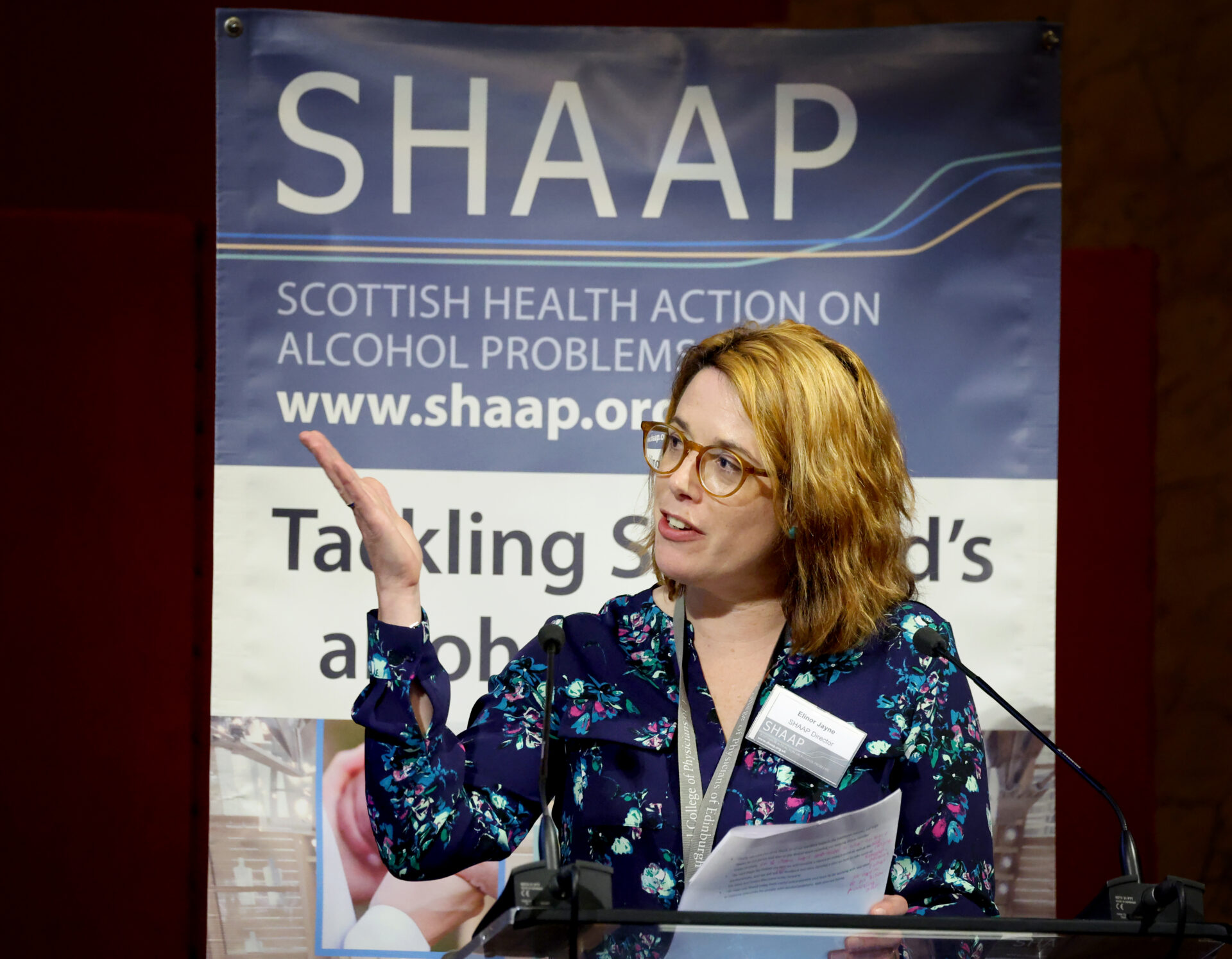
If there is one thing I’ve learned as SHAAP has investigated what happens to people with serious alcohol problems when they are caught up in the justice system, it’s that policy, frameworks and guidance are not lacking. But this doesn’t always translate into reality. There are some great examples of things going well, but the problem is that they don’t happen consistently across the system or across the country.
There needs to be more support for people in the justice system who consume alcohol at hazardous or harmful levels or who are dependent on it – which we refer to as an alcohol use disorder.
But before I set out why I think there is a significant policy implementation gap when it comes to supporting people with alcohol use disorder in the justice system, let’s look at a few examples of where things go well, and where things could be done differently.
I think when someone with a potential alcohol use disorder first comes into contact with the police, they should be signposted to support for their alcohol problem. Where people are thought to be dependent on alcohol, or who have heavy binge drinking sessions, a more proactive approach could be found to encourage them to engage with support services. However, right now, that very much depends on an individual police officer’s knowledge of local services. We’d like to see police division involvement in the development of local alcohol strategies with Alcohol and Drugs Partnerships and service providers. Embedding police involvement from the beginning would foster relations, build awareness and hopefully give police officers the confidence to build trusted relationships with people who would benefit from support to address their problem with alcohol. This public health approach to policing would potentially prevent people from coming into contact with the police or the wider justice system again.
Turning to Sheriff Courts, in Glasgow if someone appears in a Sheriff Court and alcohol is a significant factor in their offending, they are referred to the Alcohol Court – more info in this excellent blog by Sheriff Fleming. Problem-solving courts – on which the Alcohol Court is based – have been shown to be effective at reducing reoffending but having seen this court in action first-hand, I know just how effective it is at building trust and recognising progress, which is so important when embarking on a recovery journey. And it works so well because social work, addictions services, third sector providers, Alcoholics Anonymous (AA) and wider health, social care and housing services are all involved. So why does this not happen everywhere? Well as one Sheriff put it, you need to have timely and good quality local services available – and given what we know about the decline in the number of people accessing structured alcohol treatment services and general pressure on all our public services, this is a huge challenge.
People with alcohol use disorders given community sentences should be supported to access the appropriate level of alcohol treatment or support to improve their health and reduce reoffending. Community justice is an opportunity to connect people whose offending is linked to their alcohol use with access to treatment and support in the communities they are from. A wide array of services and recovery communities can help people deal with the experiences and factors linked to their harmful alcohol use.
Another step on the justice system journey to consider is what happens to people with alcohol use disorder when they enter prison? If you are dependent on alcohol you should have your detox safely managed but for many that’s the end of the story, despite prison inspection standard 9.7 stating, “Everyone who is dependent on drugs and/or alcohol receives treatment equitable to that available in the community, and is supported with their wellbeing throughout their stay in prison, on transfer and on release.” While we know that two-thirds of people in prison have alcohol use disorder with around a third possibly being dependent, the 2019 Scottish Prisoner Survey revealed only 22% are offered the chance of treatment. In practice, I think there is perhaps a misguided notion amongst some that due to the general unavailability of alcohol in prisons, people no longer have an alcohol problem, but of course if people leave to the same, if not worse, social and living conditions as before they went into prison, there’s every chance their alcohol problem will re-emerge. Indeed risk of death from alcohol causes is nine times higher for women and three times higher for men who have been in prison when compared to the general population. To take advantage of the huge opportunity that prison offers, we believe the first step must be to automatically screen people for alcohol use on reception, and where potential alcohol use disorder is identified, refer people into services within the prison with a view to supporting people on their individual recovery journey. And when someone has already been identified as having an alcohol use disorder at an earlier stage of the justice journey, this information must be shared with the prison service so that treatment can be either continued or set up. Then well in advance of liberation from prison, a throughcare plan must be developed taking into account the progress the individual has made with their personal recovery journey, the social circumstances they will be entering upon release and any other factors that could make the difference between continued recovery or not.
So what is the problem? Why is policy not consistently implemented, and why is good practice not being expanded throughout the country? The answer is that when it comes to accountability for the whole system, this is no-one’s problem. Sure, there are some bodies responsible for distinct elements of the health or justice system at various different stages of the justice journey, but is a long way from making the system as a whole work for people with alcohol use disorders. And one of the reasons, I believe, that this thorny issue is no-one’s problem is stigma. When you consider the unhealthy, judgemental attitudes that we as a society have towards people with alcohol problems, coupled with stigmatising views of people who have experience of the justice system, it’s little wonder that this all falls rapidly to the bottom of any politician’s or system leader’s to do list. So while SHAAP, and many of the organisations we’ve worked with in developing our Alcohol (in)Justice report, believe that we need a clear standard for people with alcohol use disorder for each stage of the journey, we also recognise that that is not enough. We can do our bit – and we are doing this by providing training on how alcohol dependence affects the brain and behaviour, to officials working in the justice system – but we need the Scottish Government via both the Cabinet Secretary for Justice and the Minister for Drugs and Alcohol to hold partners to account for each stage of the system. Not only that, we believe they should hold themselves accountable to the Scottish Parliament for the system as a whole. As there is simply no point in continuing to have policy, frameworks and guidance – refreshed or otherwise – that do not make a difference. If we get this right, not only will the health and wellbeing of people with alcohol use disorder be vastly improved, but pressures on both our justice and health systems will be relieved which is surely something we would all welcome.